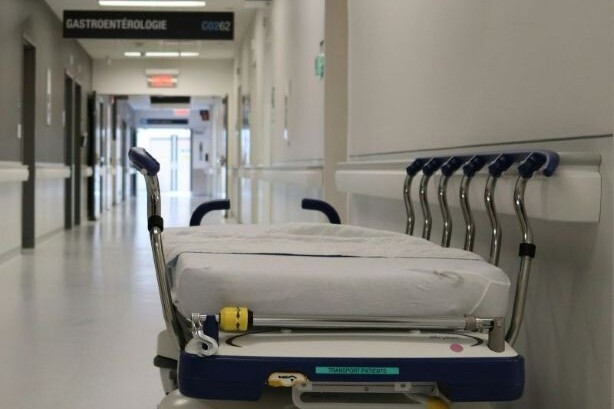
In a blog earlier this year, Patient Safety Learning’s Associate Director Claire Cox looked at how corridor care within the NHS is affecting safety culture and examined its implications for both healthcare professionals and patients.
In this new blog, she turns her attention to the associated health and safety risks, questioning whether these are being properly addressed. Claire draws out key areas for consideration and suggests practical measures that can help protect patient safety in such challenging working environments.
In recent years, corridor care has become an unfortunate reality in many NHS hospitals across the UK. With hospitals operating over capacity, patients are often treated in corridors due to a lack of available beds. While this practice may provide temporary relief in overcrowded healthcare settings, it also introduces significant health and safety risks for patients, staff and visitors.
What is corridor care?
Corridor care is a term used to describe the practice of providing medical attention to patients in hallways or other non-designated clinical areas due to overcrowding or resource shortages. This is typically due to emergency departments being overwhelmed, or a shortage of inpatient beds.
Corridor care is no longer an exception—it has become the norm in many hospitals. A new report published in January by the Royal College of Nursing illustrated the prevalence of this, sharing the experiences of more than 5,000 nursing staff on corridor care in the UK.[1] [2] In February, the Royal College of Physicians published a snap survey of its members highlighting the prevalence of corridor care, with 78% of respondents having provided care in a temporary environment in the previous month.[3]
Key health and safety risks of corridor care
When speaking about the impact of corridor care, understandably our initial focus tends to be on its direct impact on the care of the patient and the staff member providing that care. However, a somewhat overlooked aspect of this is how it can impact on the wider health and safety of those working in, or using, healthcare facilities. This can manifest itself in a number of different ways:
Infection control risks
- Corridors lack the necessary infection control measures – for example, hand washing facilities and appropriate waste disposal, including sharps – which increases the risk of hospital-acquired infections, such as MRSA and Clostridium difficile.[4]
- The inability to maintain appropriate isolation for infectious patients poses a serious public health concern.[5]
Delayed emergency response
- Corridors are not equipped for life-saving interventions in emergencies. Delayed access to equipment, medication and clinical teams in a corridor setting can increase mortality and morbidity.[6] A lack of emergency call bell alarms may incur delays in receiving appropriate emergency help.
- Swift transfer of unwell patients is often made challenging due to obstacles obstructing a usually clear path.
- Emergency teams may find it difficult to locate the unwell patient in a corridor as there may be numerous ‘temporary escalation’ areas within the department.
Obstruction and fire safety hazards
- Corridors crowded with trolleys, equipment and patients create obstructions that can impede fire evacuation routes. Fire doors may be left open to accommodate trolleys, compromising compartmentalisation and increasing the spread of fire and smoke.
- NHS Trusts are legally required under the Regulatory Reform (Fire Safety) Order 2005 to ensure that escape routes remain unobstructed, which is often compromised by corridor care.[7]
- The London Fire Brigade recently highlighted these issues with their local hospitals, citing concerns about obstruction of fire escape routes, increased fire load in circulation spaces and delayed evacuation times in the event of an emergency.[8]
Manual handling and staff safety
- Healthcare staff face increased manual handling risks while manoeuvring equipment and providing care in narrow corridors.
- This can lead to musculoskeletal disorders and workplace injuries, further exacerbating staff shortages.[9]
The question is, are these risks being addressed?
Risk assessments: A key to mitigation
While some NHS Trusts have implemented risk assessment templates for corridor care, these are not yet standardised across the system.
The Health and Safety Executive (HSE) recommends that risk assessments for corridor care include:
- infection control protocols
- fire safety compliance
- manual handling risk reduction
- patient privacy and dignity measures
- emergency response protocols.[10]
What about fire safety?
Fire safety is one of the most pressing concerns associated with corridor care. Under the Regulatory Reform (Fire Safety) Order 2005, NHS Trusts are required to ensure that:
- Escape routes remain clear at all times.
- Adequate fire risk assessments are conducted and updated regularly.
- Staff are trained in evacuation procedures, especially in high-risk areas like corridors.[11]
Are Trusts compliant?
While most Trusts have fire risk assessments in place, reports from the Care Quality Commission (CQC) indicate that compliance varies across the country. Some hospitals have been flagged for failing to adequately mitigate the fire risks associated with corridor care.[12]
What measures can we take to protect patient safety?
The below points offer some practical health and safety measures that can be put in place to help reduce risk:
- Fire risk management: Regular audits to ensure corridors are not overcrowded and escape routes remain clear.
- Patient identification and monitoring: Implementing digital systems to track patient location and their condition when placed in corridors.
- Enhanced infection control: Providing hand hygiene stations and maintaining isolation protocols even in corridor settings.
- Staff training and awareness: Ensuring staff are trained in dynamic risk assessments and evacuation procedures.
- Establishing escalation protocols: Creating clear guidelines on when to escalate corridor care situations to prevent patient harm.
The need for systemic change
Corridor care is a symptom of a healthcare system under immense pressure. While temporary risk mitigation measures can improve safety, long-term solutions require increased capacity, better resource allocation and investment in community-based care to prevent unnecessary admissions.
If the current trend continues, addressing health and safety risks associated with corridor care must become a top priority to protect both patients and healthcare staff.
Call to action
Do you work in healthcare or health and safety?
Your expertise can make a real difference! Share your corridor care risk assessments with Patient Safety Learning to help identify risks, prevent harm and improve outcomes for patients.
Comment below (sign up first for free) or email [email protected].
References
[1] Royal College of Nursing. On the frontline of the UK’s corridor care crisis, 16 January 2025. https://www.rcn.org.uk/Professional-Development/publications/rcn-frontline-of-the-uk-corridor-care-crisis-uk-pub-011-944
[2] Patient Safety Learning, Response to RCN report: On the frontline of the UK’s corridor care crisis, 17 January 2025. https://www.patientsafetylearning.org/blog/response-to-rcn-report-on-the-frontline-of-the-uks-corridor-care-crisis
[3] Royal College of Physicians. Doctors confirm ‘corridor care’ crisis as 80% forced to treat patients in unsafe spaces, 26 February 2025. https://www.rcp.ac.uk/news-and-media/news-and-opinion/doctors-confirm-corridor-care-crisis-as-80-forced-to-treat-patients-in-unsafe-spaces/
[4] National Institute for Health and Care Excellence (NICE), 2023. Infection Prevention and Control Quality Standard. London: NICE.
[5] Public Health England, 2019. Guidelines on Infection Prevention and Control. London: PHE.
[6] Royal College of Emergency Medicine (RCEM), 2021. Crowding and its Consequences: Policy Brief. London: RCEM. https://rcem.ac.uk/wp-content/uploads/2021/11/RCEM_Why_Emergency_Department_Crowding_Matters.pdf
[7] HM Government, 2005. The Regulatory Reform (Fire Safety) Order 2005. London: The Stationery Office.
[8] London Fire Brigade, Letter to Trusts to review your Fire Risk Assessments, 17 February 2025. https://www.pslhub.org/learn/improving-patient-safety/equipment-and-facilities/facilities/london-fire-brigade-letter-to-trusts-to-review-your-fire-risk-assessments-17-february-2025-r12934/
[9] Health and Safety Executive (HSE), 2020. Manual Handling Operations Regulations 1992 (as amended). London: HSE.
[10] Ibid.
[11] HM Government, 2005. The Regulatory Reform (Fire Safety) Order 2005. London: The Stationery Office.
[12] Care Quality Commission (CQC), 2021. State of Care Report 2021. London: CQC.